Preventive maintenance schedules, the failure points that actually take turbines offline, and the safety protocols behind every service visit — a practical guide for wind farm operators and technicians.
A modern utility-scale wind turbine is a 100-tonne rotating machine, mounted 100 metres in the air, exposed to wind, salt, ice and lightning. It runs 6,000 to 8,000 hours a year with minimal supervision. Keeping availability above 97% over a 20-year design life is not a matter of luck — it is the direct result of a disciplined maintenance programme built around preventive service, condition monitoring and clear safety protocols.
This guide walks through what a well-run maintenance programme looks like in the field: the schedule, the components that fail most often, the tooling used to catch faults early, and the safety rules that make climb work sustainable across a career.
## The three layers of a maintenance programme
Every mature wind O&M organisation runs three layers of work in parallel. Preventive maintenance is scheduled, calendar- or hours-based, and covers inspections, lubrication, torque checks and consumable replacement. Predictive maintenance uses condition monitoring — vibration analysis, oil sampling, borescope inspection, SCADA analytics — to intervene before a fault escalates. Corrective maintenance is the response when something fails despite the first two layers.
The economic ratio matters. A well-tuned programme keeps corrective maintenance below 15% of total O&M spend. Once corrective work climbs past 25%, availability drops and cost per MWh rises quickly. The goal of the schedule below is to keep that ratio in the healthy zone.
## Preventive maintenance schedule
The industry-standard rhythm for most utility turbines is two service visits per year — a spring inspection and an autumn service — with a heavier annual campaign every 12 months and a major overhaul at year 5, year 10 and year 15. Actual intervals track the OEM manual, but the pattern is remarkably consistent across platforms.
Every 6 months (semi-annual service, roughly 4,000 operating hours): visual inspection of nacelle, hub and tower internals; torque checks on a sample of structural bolts (blade root, yaw ring, tower flanges); lubrication top-up on main bearing, yaw and pitch gearboxes; hydraulic and pitch system function tests; brake pad wear check; slip-ring and slip-brush inspection on doubly-fed platforms; fire suppression and emergency descent equipment inventory.
Every 12 months (annual service): everything in the semi-annual visit plus full torque re-verification of structural bolts to the OEM percentile plan, gearbox and hydraulic oil sampling, drone or rope-access blade inspection with leading-edge photographs, thermographic scan of switchgear and transformer, lightning protection continuity test, earthing resistance measurement, functional test of every safety system (over-speed, vibration trip, controller watchdog).
Every 5 years (major inspection): borescope of gearbox planetary and intermediate stages, main bearing endoscopy, drivetrain alignment check, converter capacitor and cooling-fan replacement, replacement of ageing hydraulic hoses and accumulators, structural survey of the tower interior and foundation top.
Documenting each visit against the same task list, in the same CMMS, is what turns individual service reports into a fleet-level dataset that predictive maintenance can act on.
## Common failure points and how to catch them early
Across our own project portfolio and published fleet data, six components account for the majority of unplanned downtime. Knowing what fails, and what warning it gives, is the core of a good maintenance strategy.
**Gearbox.** Statistically the most expensive component to replace, at EUR 250,000 to 500,000 including crane mobilisation. High-speed shaft bearings and intermediate-stage gears fail most often. Warning signs: rising iron content in oil analysis, growing 1x-shaft or gear-mesh vibration signatures, elevated bearing temperatures. Catching this at oil-sample stage — well before secondary damage — is what separates a EUR 30,000 in-situ repair from a full uptower gearbox exchange.
**Generator.** Bearing failures dominate, followed by insulation and slip-ring wear on DFIG platforms. Warning signs: rising vibration in specific frequency bands, partial discharge on insulation tests, temperature drift, brush dust accumulation. Predictable if monitored, catastrophic if not.
**Main bearing.** The single largest bearing on the machine, and difficult to change without dropping the rotor. Grease sampling and low-frequency vibration analysis catch spalling months before it becomes a full replacement.
**Pitch system.** Failures here are the leading cause of unplanned stops, though usually with modest per-event cost. Battery packs and pitch motors are the usual suspects. Semi-annual battery discharge tests and pitch-angle repeatability checks catch most issues before a trip.
**Blades.** Leading-edge erosion follows a predictable curve. Between year 4 and year 7 there is a window where erosion is visible but has not yet penetrated the structural laminate. Repair in that window is a fraction of the cost of the same repair once fibres are exposed.
**Yaw system.** Yaw drives and yaw brake pads wear steadily. Symptoms include yaw motor current draw, unexpected yaw errors and pad thickness at inspection. Cheap to service, expensive to ignore.
## Condition monitoring: making the data work
The predictive layer sits on three data streams: continuous vibration monitoring (CMS), periodic oil sampling and periodic visual inspection (borescope, drone, thermographic). Each stream alone catches some faults; the value comes from correlating them.
A rising iron count in oil, combined with a growing gear-mesh vibration signature and a visible spall on a planet gear during borescope, tells a clear story that any one signal alone would miss. Modern fleet-wide monitoring platforms make this correlation practical at scale, but a human analyst who has seen the failure mode before is still the one who gets the intervention timing right.
For operators of small fleets, third-party monitoring services are usually more cost-effective than staffing an in-house analyst. What matters is that the same person looks at the same turbine's data month after month — pattern recognition is the whole game.
## Safety protocols: non-negotiables
Wind turbine maintenance is inherently high-risk work: work-at-height, confined-space, high-voltage, rotating machinery, lifting operations. The industry has converged on a set of protocols that make the work sustainable across a career, and every operator should insist on them.
**GWO certification.** All technicians should hold a valid Global Wind Organisation Basic Safety Training certificate (Working at Heights, First Aid, Manual Handling, Fire Awareness, Sea Survival where relevant). Refresh every 24 months. This is a hard prerequisite, not an aspiration.
**Lockout–tagout (LOTO).** Before any electrical or mechanical work, the turbine is stopped, isolated, locked and tagged at every energy source (converter, transformer, hydraulics, rotor lock). Two-person rule: one person locks, another verifies. No exceptions for 'just a quick check'.
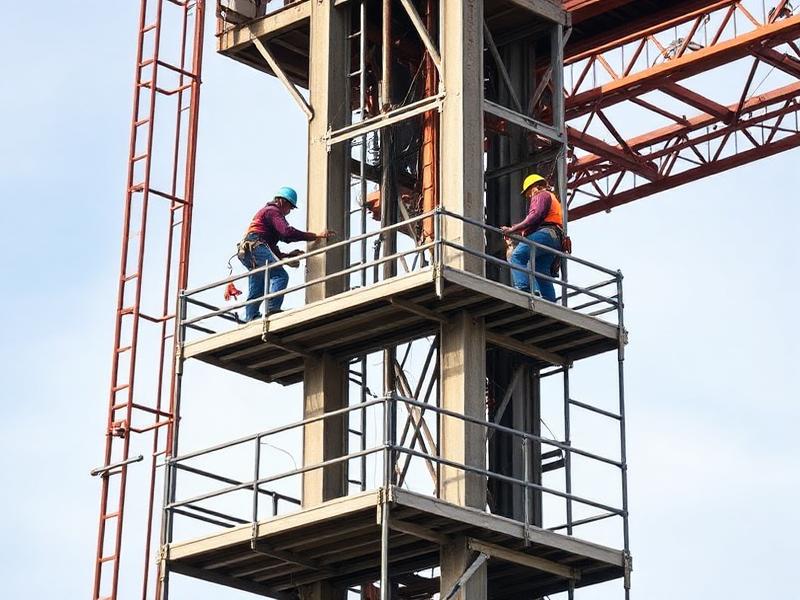
**Climb assist and fall protection.** Twin-lanyard tie-off at all times above the platform. Modern climb-assist systems reduce fatigue-related incidents on tall towers materially — worth the capex on any tower above 80 metres.
**Rescue plan.** Every ascent is preceded by a documented rescue plan, matched to the tower, the weather and the crew composition. Emergency descent devices are inspected before the climb, not after.
**Weather stops.** Wind speed, lightning proximity, visibility and ice load limits are published for every task, and the site lead has explicit authority to postpone without commercial pressure. That authority has to come from the top of the organisation to be real.
**Exclusion zones.** During lifts and blade work, a clear physical barrier and a dedicated banksman keep people out of the fall zone. On paper everyone agrees; in practice, discipline is what prevents 90% of near-misses.
## Building the programme
Good wind turbine maintenance is not glamorous. It is repetitive, documented, and driven by the same checklists visit after visit. That repetition is exactly what makes it work: over a 20-year asset life, the operators who ship 97%+ availability are the ones whose service reports look boringly similar year on year.
If you are building or auditing a maintenance programme, start with the schedule, layer in condition monitoring against the six failure points above, and make the safety protocols non-negotiable. The economics take care of themselves.
For operators considering outsourced service, a partner with fleet-level data across multiple platforms will spot patterns faster than a single-fleet team ever can. That is a large part of the value in a full-service maintenance contract — and the reason we invest so heavily in cross-project pattern recognition at Ultra Wind Energy.